
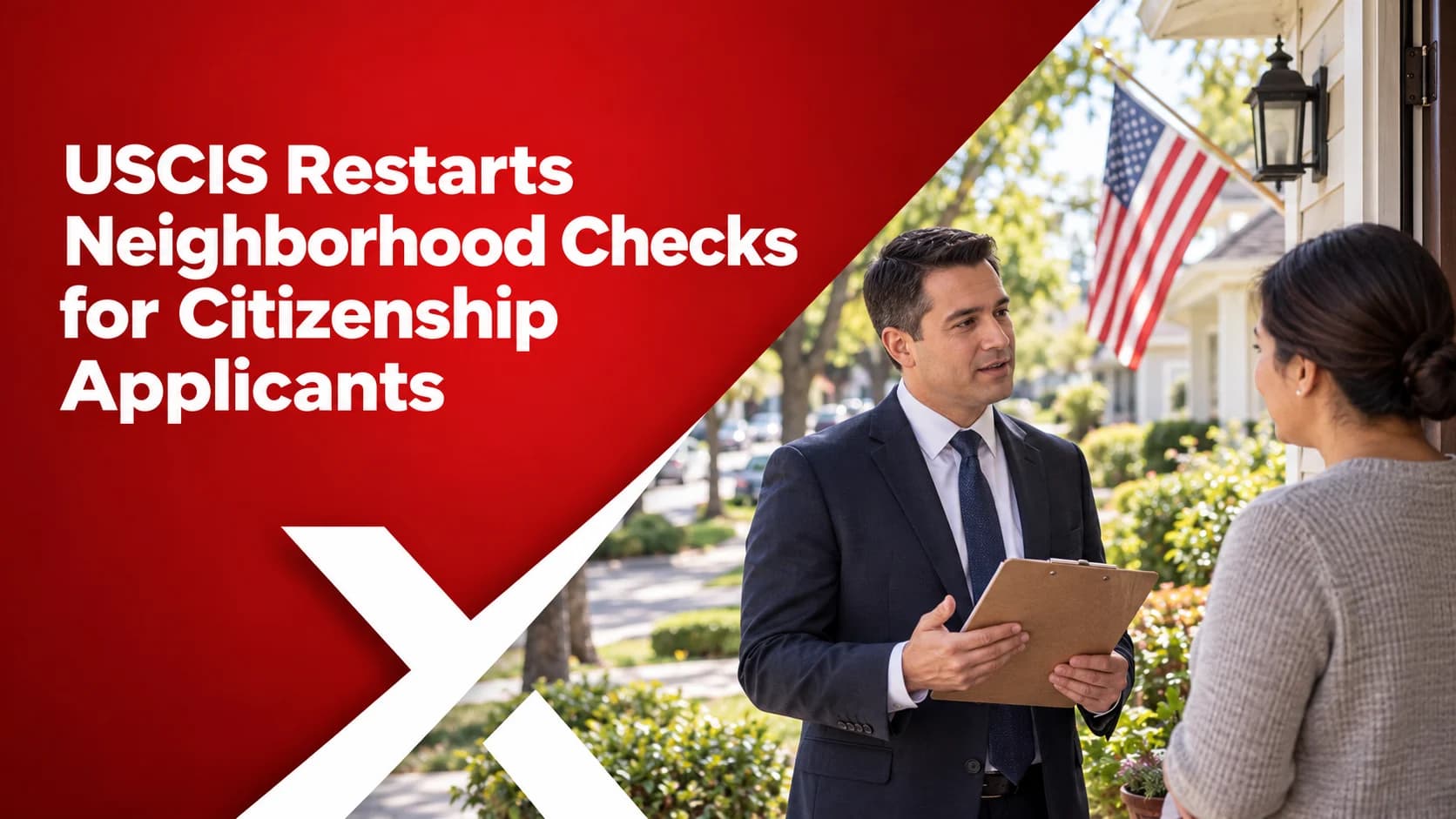
U.S. Citizenship and Immigration Services (USCIS) has updated its guidance on neighborhood investigations for people applying for U.S. citizenship through naturalization. These investigations may allow the agency to verify information in a Form N-400 application by speaking with people who know the applicant, such as neighbors, employers, or coworkers.
The August 25, 2026 policy update adds guidance to the USCIS Policy Manual on personal investigations and the review of naturalization eligibility. It builds on USCIS’s August 2025 action ending its longstanding general waiver of these investigations. The updated guidance applies to naturalization applications pending or filed on or after August 25, 2026. uscis.gov
What Are USCIS Neighborhood Checks?
A neighborhood check, also called a personal investigation, is one way USCIS may gather information while reviewing a naturalization application. The agency may contact people in an applicant’s community or workplace to help verify information relevant to the application.
The purpose is to help USCIS assess whether an applicant meets naturalization requirements. These include continuous residence, good moral character, and attachment to the principles of the U.S. Constitution. The investigation is a discretionary tool within the broader review of an application. uscis.gov
Who May USCIS Contact?
Depending on the case, USCIS may speak with people such as:
- Neighbors or other community members
- An employer, manager, or coworker
- Other people who can provide relevant information about the applicant
A neighborhood investigation is not necessarily a home visit, and the available guidance does not mean that every applicant will receive one. USCIS may decide whether to conduct or waive an investigation based on its review.
Can Reference Letters Help?
Applicants may voluntarily submit testimonial or character-reference letters with their application. USCIS says it may consider these letters when deciding whether to waive an investigation. Letters from people who know the applicant personally, are not family members, and can provide specific information may be useful. USCIS may prefer letters from U.S. citizens.
Submitting letters does not guarantee that USCIS will waive an investigation, and the letters do not replace the Form N-400 or other required evidence. Applicants should make sure that every letter is accurate, based on the writer’s own knowledge, and consistent with the information in the application.
How Naturalization Applicants Can Prepare
Before filing Form N-400, review the application and supporting records carefully. Check that details such as addresses, employment history, travel, and other information are accurate and consistent. Keep relevant records available in case USCIS asks questions or requests additional information.
If you choose to provide reference letters, ask people who can describe their firsthand knowledge of you. Avoid generic or exaggerated statements. If USCIS contacts someone in your community or workplace, answer any questions truthfully and follow the instructions USCIS provides.
The policy update does not mean that every applicant will face a neighborhood check or that a check by itself determines the outcome. USCIS reviews each application under the applicable naturalization requirements, and the effect of the guidance may vary by case.
What Applicants Should Keep in Mind
USCIS neighborhood checks add another possible way for the agency to verify information in a citizenship application. Applicants should focus on submitting complete, truthful information and responding promptly to any USCIS communication. If an application involves complicated residence, travel, criminal-history, or good-moral-character issues, consider getting advice from a qualified U.S. immigration attorney before filing.
Disclaimer: This article is for general informational purposes only and is not a substitute for legal advice. Naturalization eligibility depends on the applicant’s individual circumstances.

